Back to Blog
Articles
July 27, 2026
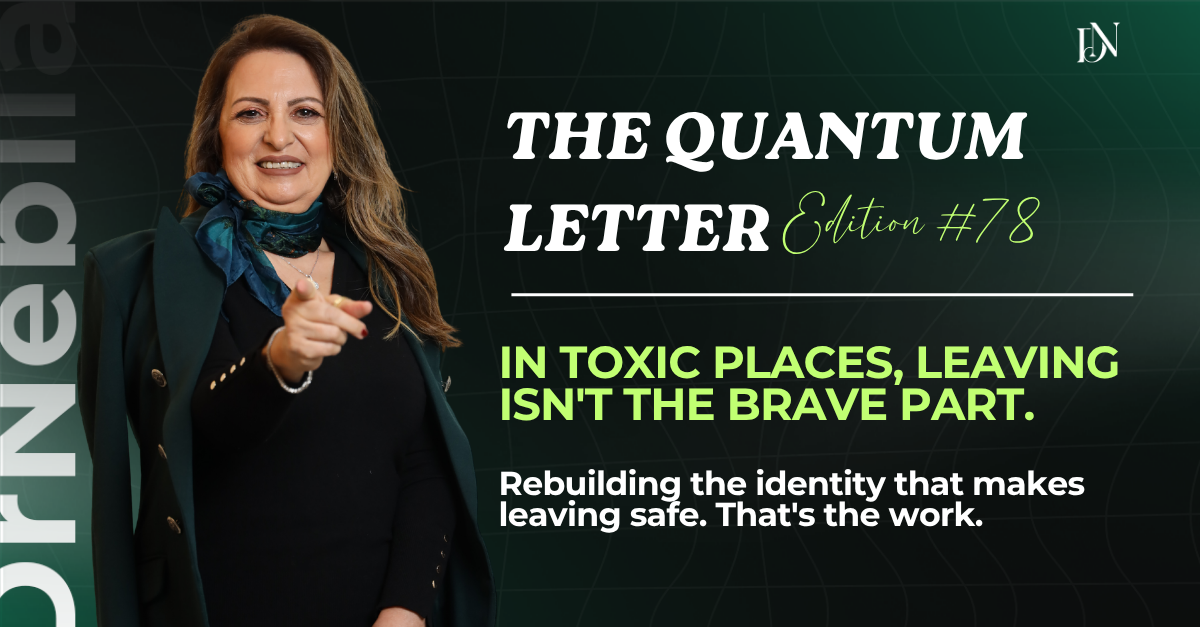
In Toxic Workplaces, Leaving Isn't the Brave Part.
The reorg happened. The promotion promise vanished.
The new team took office. Meetings started rolling without her.
Not late. Not forgotten.
Left off the invite. On purpose.
Hannah built her career the right way.
Multinational. Senior title.
A reputation for results.
On paper: an asset.
In the room: erased.
Slowly, at first. A meeting she wasn't looped into.
A decision made before she'd heard it existed.
A team member stolen from under her. Then another.
Then faster. Feedback that stopped tracking to performance.
Credit that moved to other names. Silence where there used to be respect.
She'd watch the temperature change when she walked in. Not hostile. Worse than hostile. Indifferent. As if her presence needed to be tolerated, not required.
She noticed it in the small mechanics of a meeting. Her point, restated by someone else two minutes later. Suddenly worth writing down.
She noticed it in the calendar. Meetings that used to include her, quietly rerouted around her.
She told herself it was a phase. A reorg. A personality clash that would pass.
She did what capable women do in rooms like that.
She worked harder.
She stayed professional.
She waited for it to get better.
It didn't get better.
Toxic rooms don't reform for the people they're draining.
Here's what nobody tells you about that waiting period.
It doesn't just cost you meetings. It costs you certainty.
You start rehearsing your own value before you speak it. You start writing a shorter version of your story so it's easier for the room to dismiss. You start believing the room's edited version of you is the accurate one.
That's not weakness. That's exposure. Stay long enough in a room that keeps telling you no, and you'll eventually agree with it.
This isn't an expat problem. Nationals get shrunk in these rooms too. The passport doesn't decide who gets erased. The room does.
When Hannah came to me, she didn't ask for an exit strategy.
She asked why she still felt lucky to be tolerated in a job she was overqualified for.
That question was the real work.
Because here's the part most career advice skips:
You cannot negotiate a strong exit from a diminished self-image.
Ask from a shrunk identity, and you'll take whatever the next room offers. A different desk. Same ceiling. Same appetite for less.
The room had spent years teaching Hannah she should be grateful just to have a seat. We spent months unteaching it.
Not through affirmations. Through evidence.
We rebuilt the ledger she'd stopped keeping — the wins the room had trained her to minimize. We rehearsed the sentence she'd stopped saying out loud: what she was actually worth, in her own words, with proof behind it. We practiced the version of her that didn't shrink to fit a meeting she wasn't invited to.
Every week, the same fifteen minutes. Three wins, named out loud, in her own voice. Not for a performance review. For her own nervous system — proof it could keep collecting evidence, even inside a room that refused to see it.
That's how you keep your confidence inside a toxic room, before you ever leave it. You stop outsourcing your worth to people who benefit from you doubting it. You keep your own ledger. You keep your own witnesses. You keep receipts the room can't rewrite.
And that answers the question everyone asks too early: when do you leave?
Not the day it becomes unbearable. By then you're deciding from exhaustion, not clarity. Exhaustion negotiates badly.
There's a version of leaving that looks brave and isn't. The dramatic resignation. Timed to the day someone finally goes too far. It feels powerful in the moment. It rarely lands you anywhere better — you're still negotiating from the room's verdict of you. You've just moved it one door down.
The version that actually works looks quieter. A woman who no longer needs the room to confirm her worth, calmly updating her documents, taking calls a rival company had been trying to get through for months.
The right time to leave is the day you stop needing the room's permission to know your value. That's not a calendar date. That's an identity marker. You'll feel it before you can explain it: the meeting excludes you, and it lands as information about the room — not a verdict on you.
Do the identity work first. The exit becomes a formality after that. Not the leap everyone warns you about.
This is the piece almost every career change skips. People update the résumé first. Rehearse the pitch first. Polish the headline first. All useful. All secondary.
If the identity underneath still says lucky to be here, the new room reads it in the first ninety seconds. In the handshake. In how you answer 'tell me about yourself.' In whether you ask for the number you deserve, or the number you think you can get away with asking for.
The rebrand isn't cosmetic. It's structural. Fix the foundation, and the résumé just describes it accurately for once.
When Hannah moved, she didn't run.
She walked. Into a senior role. Not a softer landing.
A higher one. In Europe.
That's the part most people miss about leaving a room that's shrinking them:
Leaving isn't the brave part.
Rebuilding the identity that makes leaving safe — that's the work.
If you're performing brilliantly inside a room that's making you smaller, the shrinking isn't proof of anything about you.
It's proof the room ran out of ways to keep you in it honestly.
--
That's all for this week.
See you next Tuesday.
Warmly, Nebila
-------------------
I'm Dr. Nebila. I help accomplished women close the gap between what they've earned and being seen.
Join 11,000+ senior women reading The Quantum Letter — and grab three things to start closing the gap between what you've earned and being seen:
2 Profile Tweaks: Invisible to Visible in 10 Minutes — nebiladhieb.myflodesk.com/2templates
The Visibility Identity Masterclass — nebiladhieb.myflodesk.com/masterclass
The Raise Playbook — nebiladhieb.myflodesk.com/raiseplaybook
The new team took office. Meetings started rolling without her.
Not late. Not forgotten.
Left off the invite. On purpose.
Hannah built her career the right way.
Multinational. Senior title.
A reputation for results.
On paper: an asset.
In the room: erased.
Slowly, at first. A meeting she wasn't looped into.
A decision made before she'd heard it existed.
A team member stolen from under her. Then another.
Then faster. Feedback that stopped tracking to performance.
Credit that moved to other names. Silence where there used to be respect.
She'd watch the temperature change when she walked in. Not hostile. Worse than hostile. Indifferent. As if her presence needed to be tolerated, not required.
She noticed it in the small mechanics of a meeting. Her point, restated by someone else two minutes later. Suddenly worth writing down.
She noticed it in the calendar. Meetings that used to include her, quietly rerouted around her.
She told herself it was a phase. A reorg. A personality clash that would pass.
She did what capable women do in rooms like that.
She worked harder.
She stayed professional.
She waited for it to get better.
It didn't get better.
Toxic rooms don't reform for the people they're draining.
Here's what nobody tells you about that waiting period.
It doesn't just cost you meetings. It costs you certainty.
You start rehearsing your own value before you speak it. You start writing a shorter version of your story so it's easier for the room to dismiss. You start believing the room's edited version of you is the accurate one.
That's not weakness. That's exposure. Stay long enough in a room that keeps telling you no, and you'll eventually agree with it.
This isn't an expat problem. Nationals get shrunk in these rooms too. The passport doesn't decide who gets erased. The room does.
When Hannah came to me, she didn't ask for an exit strategy.
She asked why she still felt lucky to be tolerated in a job she was overqualified for.
That question was the real work.
Because here's the part most career advice skips:
You cannot negotiate a strong exit from a diminished self-image.
Ask from a shrunk identity, and you'll take whatever the next room offers. A different desk. Same ceiling. Same appetite for less.
The room had spent years teaching Hannah she should be grateful just to have a seat. We spent months unteaching it.
Not through affirmations. Through evidence.
We rebuilt the ledger she'd stopped keeping — the wins the room had trained her to minimize. We rehearsed the sentence she'd stopped saying out loud: what she was actually worth, in her own words, with proof behind it. We practiced the version of her that didn't shrink to fit a meeting she wasn't invited to.
Every week, the same fifteen minutes. Three wins, named out loud, in her own voice. Not for a performance review. For her own nervous system — proof it could keep collecting evidence, even inside a room that refused to see it.
That's how you keep your confidence inside a toxic room, before you ever leave it. You stop outsourcing your worth to people who benefit from you doubting it. You keep your own ledger. You keep your own witnesses. You keep receipts the room can't rewrite.
And that answers the question everyone asks too early: when do you leave?
Not the day it becomes unbearable. By then you're deciding from exhaustion, not clarity. Exhaustion negotiates badly.
There's a version of leaving that looks brave and isn't. The dramatic resignation. Timed to the day someone finally goes too far. It feels powerful in the moment. It rarely lands you anywhere better — you're still negotiating from the room's verdict of you. You've just moved it one door down.
The version that actually works looks quieter. A woman who no longer needs the room to confirm her worth, calmly updating her documents, taking calls a rival company had been trying to get through for months.
The right time to leave is the day you stop needing the room's permission to know your value. That's not a calendar date. That's an identity marker. You'll feel it before you can explain it: the meeting excludes you, and it lands as information about the room — not a verdict on you.
Do the identity work first. The exit becomes a formality after that. Not the leap everyone warns you about.
This is the piece almost every career change skips. People update the résumé first. Rehearse the pitch first. Polish the headline first. All useful. All secondary.
If the identity underneath still says lucky to be here, the new room reads it in the first ninety seconds. In the handshake. In how you answer 'tell me about yourself.' In whether you ask for the number you deserve, or the number you think you can get away with asking for.
The rebrand isn't cosmetic. It's structural. Fix the foundation, and the résumé just describes it accurately for once.
When Hannah moved, she didn't run.
She walked. Into a senior role. Not a softer landing.
A higher one. In Europe.
That's the part most people miss about leaving a room that's shrinking them:
Leaving isn't the brave part.
Rebuilding the identity that makes leaving safe — that's the work.
If you're performing brilliantly inside a room that's making you smaller, the shrinking isn't proof of anything about you.
It's proof the room ran out of ways to keep you in it honestly.
--
That's all for this week.
See you next Tuesday.
Warmly, Nebila
-------------------
I'm Dr. Nebila. I help accomplished women close the gap between what they've earned and being seen.
Join 11,000+ senior women reading The Quantum Letter — and grab three things to start closing the gap between what you've earned and being seen:
2 Profile Tweaks: Invisible to Visible in 10 Minutes — nebiladhieb.myflodesk.com/2templates
The Visibility Identity Masterclass — nebiladhieb.myflodesk.com/masterclass
The Raise Playbook — nebiladhieb.myflodesk.com/raiseplaybook
Leave a Reply
Your email address will not be published. Required fields are marked *
Comments (0)
Recent Posts

News
June 06, 2026
Why Read The Quantum Letters?
Articles
August 10, 2026
The Achievement–Invisibility Paradox
Articles
July 27, 2026
In Toxic Workplaces, Leaving Isn't the Brave Part.

Articles
September 21, 2025
THE QUANTUM LETTER Edition No. 1

Articles
August 31, 2026