Back to Blog
Articles
August 24, 2026
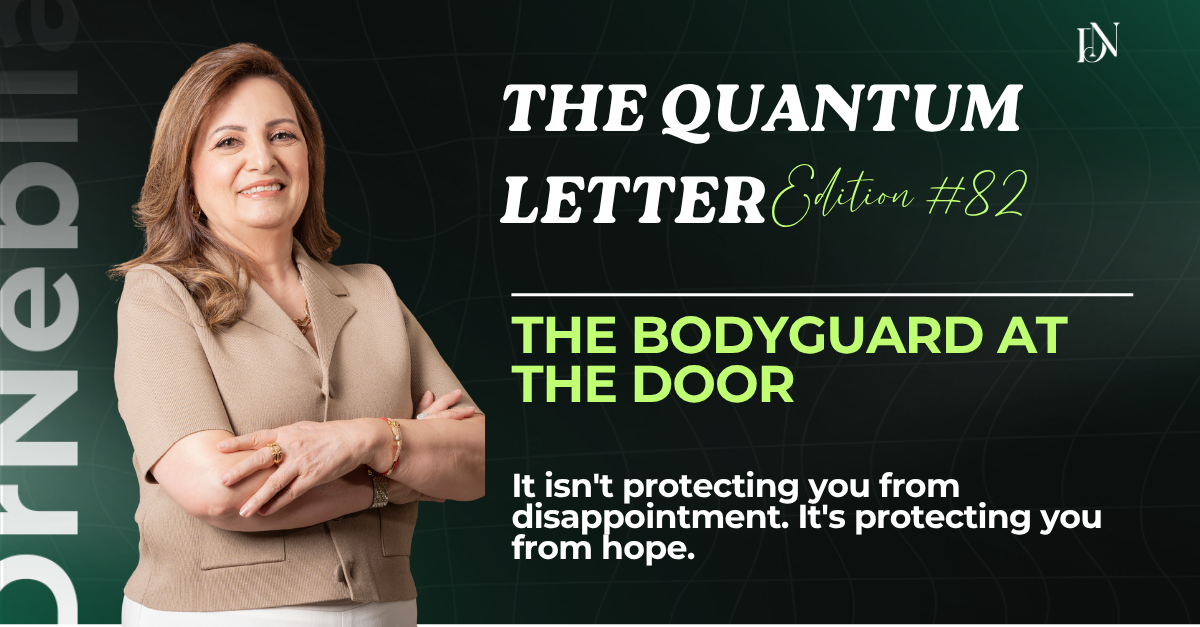
The Bodyguard At The Door
This month I'm going to show you results.
Real numbers from real women in real negotiations. 10,000 SAR above a current salary. An offer 30% higher than the one first put on the table. A salary conversation that finally happened after two years of silence.
But before I show you a single one, I need to teach you how to read them. Because there are two ways to read another woman's result, and only one of them changes anything in your own life.
The bodyguard at the door
Here's what will happen this month. I can almost promise it.
You'll read a line like “10,000 SAR above her current salary,” and somewhere between that sentence and the next, a familiar voice will lean in and whisper:
“Good for her. My situation is different.”
Notice how reasonable that voice sounds. How modest. It doesn't argue with the result. It just quietly excuses you from the evidence.
That voice feels like humility. It isn't. It's a bodyguard.
Its job is to protect your current identity: the version of you that has already made peace with this salary, this title, this seat slightly outside the room where the decisions get made. Every piece of evidence that change is possible threatens that peace, so the bodyguard steps in front of it. Politely. Every time.
And the strange part? It isn't protecting you from disappointment. It's protecting you from hope. Because hope creates obligation. If change is possible for women exactly like you (same region, same industries, same voice that shakes a little in salary conversations), then staying where you are stops being fate and starts being a decision.
That's uncomfortable. So the bodyguard earns its keep.
What it costs you
Before you decide it's harmless, do one piece of arithmetic with me.
Take the gap in one of this month's stories: 10,000 SAR a month. Not a bonus. A repricing, paid every month from the day the new offer was signed. One year of “my situation is different” costs 120,000 SAR. Three years, 360,000. And the number follows you, because every future offer gets benchmarked against your current one.
The bodyguard never presents this invoice. It only shows you the cost of trying: the awkward conversation, the possible no. The cost of not trying gets filed somewhere you never look. Its entire authority rests on incomplete accounting, and once you complete the accounting, it loses the argument.
The frame I want you to hold this month
None of these women were exceptions.
Not one had connections you don't have, credentials you can't get, or courage you weren't born with. I know, because I was in the room for the before as well as the after, and the before looked exactly like the voice notes I get from readers of this letter every week. The distance between the women who send them and the women in this month's stories isn't talent. It's months.
Every result you'll read came from the same repeatable sequence: identity first, positioning second, negotiation third. In that order. Every time.
Why the order matters
Most advice runs this sequence backwards. It hands you negotiation scripts first and hopes the confidence arrives by itself. It doesn't. A script spoken by an identity that doesn't believe it is audible from across the table. Decision makers don't hear your words. They hear your relationship to your words.
Identity first. Before any conversation with an employer, there's a conversation with yourself: who exactly is asking? A woman requesting a favour, or a professional repricing an asset? This isn't affirmations in the mirror. It's evidence work: reading your actual track record the way a stranger would, without the discount you've been applying for years.
Positioning second. We translate that identity for the market, swapping responsibilities for outcomes and adjectives for numbers, until the value is obvious on paper. That's what makes the negotiation short. When the other side already sees the value, you're confirming, not persuading.
Negotiation third. By now it's the smallest step, not the biggest. The sentence gets said in under a minute, and the silence after it is survivable because the two stages underneath are load-bearing. My clients keep reporting the same feeling afterwards: “that was easier than I expected.” It wasn't easier. It was prepared.
Three women, one pattern
When Sarah's offer came in 10,000 SAR above her current salary, that wasn't charisma. Identity first: she stopped introducing her achievements with “I was lucky enough to...” Positioning second: she rebuilt how she described her work until the value was undeniable before she ever spoke. Negotiation third: one sentence, said once, held through the silence.
When Zainab's offer came in 30% above the original, same sequence. She'll tell you herself the negotiation was the easiest part. The hard part was letting go of the story that asking would make her look ungrateful.
And when Ghada finally spoke, after two years of silence, that was the same pattern at an earlier stage. The number will come; the sequence hasn't finished with her yet. But the distance between silence and speaking is larger than the distance between speaking and 30%. She has already crossed the harder gap.
Three situations the bodyguard would call “different.” One sequence.
Miracles can be admired. Patterns can be copied.
A miracle asks nothing of you. You can read about it, feel briefly warm, and change nothing. Miracles are entertainment.
A pattern is a set of instructions with someone else's fingerprints on it, proving the instructions work. You can't honestly accept that something is a pattern and leave it on the page. The question stops being “how wonderful for her” and becomes “which stage am I standing in?”
So read this month's stories as instructions, not inspiration. That shift, from spectator to student, is the difference between the women who reply to these letters and the women who, twelve months from now, are reading someone else's results with the same bodyguard whispering the same sentence.
One question that disarms it
When the voice shows up, and it will, don't fight it. Just ask it one question:
“What exactly is different about my situation, specifically?”
Write the answer down. On paper, in full sentences. Not in your head, where the bodyguard controls the lighting. The sentence behaves differently on paper. Smaller, usually. Sometimes almost embarrassed.
Nine times out of ten, what's on the paper isn't a fact. It's a feeling with a job. “It's a bad time” was also true in every year my clients got their increases. “I'm not the type” isn't even pretending to be a fact. And the one time in ten it is a fact? Then we know exactly what to work with, and the work gets faster. Either way you win.
Here is the door
Every woman you'll read about this month started exactly where you are: reading someone else's result, bodyguard whispering, sequence not yet begun. The only structural difference is that at some point they stopped reading and replied.
So here's my invitation, and it has two levels.
First: hit reply and tell me what your bodyguard says. The exact sentence, word for word. I'll tell you if I've heard it before. (I have. In eleven years I've met maybe six objections that were new to me, and several hundred women convinced theirs was unique.)
Second: if what you felt reading Sarah's number wasn't admiration but recognition, a quiet “I want that, and I'm tired of waiting for it,” then say so in your reply and put the word PATTERN at the top. I'll come back to you personally with what working together looks like, and we'll find out on paper what's actually different about your situation, and what only feels that way.
The results are coming either way. The only question is which side of them you'll be reading from next year.
Nebila
I'm Dr. Nebila. I help accomplished women close the gap between what they've earned and being seen.
P.S. Sarah's bodyguard, for the record, said: “The market is terrible this year.” It said that in the same year, in the same market, in which her offer came in 10,000 SAR higher. The market was never the variable. The sequence was.
— Standard sign-off footer (unchanged) —
That's all for this week.
See you next Tuesday.
Warmly, Nebila
Join 11,000+ senior women reading The Quantum Letter — and grab three things to start closing the gap between what you've earned and being seen:
2 Profile Tweaks: Invisible to Visible in 10 Minutes — nebiladhieb.myflodesk.com/2templates
The Visibility Identity Masterclass — nebiladhieb.myflodesk.com/masterclass
The Raise Playbook — nebiladhieb.myflodesk.com/raiseplaybook
Real numbers from real women in real negotiations. 10,000 SAR above a current salary. An offer 30% higher than the one first put on the table. A salary conversation that finally happened after two years of silence.
But before I show you a single one, I need to teach you how to read them. Because there are two ways to read another woman's result, and only one of them changes anything in your own life.
The bodyguard at the door
Here's what will happen this month. I can almost promise it.
You'll read a line like “10,000 SAR above her current salary,” and somewhere between that sentence and the next, a familiar voice will lean in and whisper:
“Good for her. My situation is different.”
Notice how reasonable that voice sounds. How modest. It doesn't argue with the result. It just quietly excuses you from the evidence.
That voice feels like humility. It isn't. It's a bodyguard.
Its job is to protect your current identity: the version of you that has already made peace with this salary, this title, this seat slightly outside the room where the decisions get made. Every piece of evidence that change is possible threatens that peace, so the bodyguard steps in front of it. Politely. Every time.
And the strange part? It isn't protecting you from disappointment. It's protecting you from hope. Because hope creates obligation. If change is possible for women exactly like you (same region, same industries, same voice that shakes a little in salary conversations), then staying where you are stops being fate and starts being a decision.
That's uncomfortable. So the bodyguard earns its keep.
What it costs you
Before you decide it's harmless, do one piece of arithmetic with me.
Take the gap in one of this month's stories: 10,000 SAR a month. Not a bonus. A repricing, paid every month from the day the new offer was signed. One year of “my situation is different” costs 120,000 SAR. Three years, 360,000. And the number follows you, because every future offer gets benchmarked against your current one.
The bodyguard never presents this invoice. It only shows you the cost of trying: the awkward conversation, the possible no. The cost of not trying gets filed somewhere you never look. Its entire authority rests on incomplete accounting, and once you complete the accounting, it loses the argument.
The frame I want you to hold this month
None of these women were exceptions.
Not one had connections you don't have, credentials you can't get, or courage you weren't born with. I know, because I was in the room for the before as well as the after, and the before looked exactly like the voice notes I get from readers of this letter every week. The distance between the women who send them and the women in this month's stories isn't talent. It's months.
Every result you'll read came from the same repeatable sequence: identity first, positioning second, negotiation third. In that order. Every time.
Why the order matters
Most advice runs this sequence backwards. It hands you negotiation scripts first and hopes the confidence arrives by itself. It doesn't. A script spoken by an identity that doesn't believe it is audible from across the table. Decision makers don't hear your words. They hear your relationship to your words.
Identity first. Before any conversation with an employer, there's a conversation with yourself: who exactly is asking? A woman requesting a favour, or a professional repricing an asset? This isn't affirmations in the mirror. It's evidence work: reading your actual track record the way a stranger would, without the discount you've been applying for years.
Positioning second. We translate that identity for the market, swapping responsibilities for outcomes and adjectives for numbers, until the value is obvious on paper. That's what makes the negotiation short. When the other side already sees the value, you're confirming, not persuading.
Negotiation third. By now it's the smallest step, not the biggest. The sentence gets said in under a minute, and the silence after it is survivable because the two stages underneath are load-bearing. My clients keep reporting the same feeling afterwards: “that was easier than I expected.” It wasn't easier. It was prepared.
Three women, one pattern
When Sarah's offer came in 10,000 SAR above her current salary, that wasn't charisma. Identity first: she stopped introducing her achievements with “I was lucky enough to...” Positioning second: she rebuilt how she described her work until the value was undeniable before she ever spoke. Negotiation third: one sentence, said once, held through the silence.
When Zainab's offer came in 30% above the original, same sequence. She'll tell you herself the negotiation was the easiest part. The hard part was letting go of the story that asking would make her look ungrateful.
And when Ghada finally spoke, after two years of silence, that was the same pattern at an earlier stage. The number will come; the sequence hasn't finished with her yet. But the distance between silence and speaking is larger than the distance between speaking and 30%. She has already crossed the harder gap.
Three situations the bodyguard would call “different.” One sequence.
Miracles can be admired. Patterns can be copied.
A miracle asks nothing of you. You can read about it, feel briefly warm, and change nothing. Miracles are entertainment.
A pattern is a set of instructions with someone else's fingerprints on it, proving the instructions work. You can't honestly accept that something is a pattern and leave it on the page. The question stops being “how wonderful for her” and becomes “which stage am I standing in?”
So read this month's stories as instructions, not inspiration. That shift, from spectator to student, is the difference between the women who reply to these letters and the women who, twelve months from now, are reading someone else's results with the same bodyguard whispering the same sentence.
One question that disarms it
When the voice shows up, and it will, don't fight it. Just ask it one question:
“What exactly is different about my situation, specifically?”
Write the answer down. On paper, in full sentences. Not in your head, where the bodyguard controls the lighting. The sentence behaves differently on paper. Smaller, usually. Sometimes almost embarrassed.
Nine times out of ten, what's on the paper isn't a fact. It's a feeling with a job. “It's a bad time” was also true in every year my clients got their increases. “I'm not the type” isn't even pretending to be a fact. And the one time in ten it is a fact? Then we know exactly what to work with, and the work gets faster. Either way you win.
Here is the door
Every woman you'll read about this month started exactly where you are: reading someone else's result, bodyguard whispering, sequence not yet begun. The only structural difference is that at some point they stopped reading and replied.
So here's my invitation, and it has two levels.
First: hit reply and tell me what your bodyguard says. The exact sentence, word for word. I'll tell you if I've heard it before. (I have. In eleven years I've met maybe six objections that were new to me, and several hundred women convinced theirs was unique.)
Second: if what you felt reading Sarah's number wasn't admiration but recognition, a quiet “I want that, and I'm tired of waiting for it,” then say so in your reply and put the word PATTERN at the top. I'll come back to you personally with what working together looks like, and we'll find out on paper what's actually different about your situation, and what only feels that way.
The results are coming either way. The only question is which side of them you'll be reading from next year.
Nebila
I'm Dr. Nebila. I help accomplished women close the gap between what they've earned and being seen.
P.S. Sarah's bodyguard, for the record, said: “The market is terrible this year.” It said that in the same year, in the same market, in which her offer came in 10,000 SAR higher. The market was never the variable. The sequence was.
— Standard sign-off footer (unchanged) —
That's all for this week.
See you next Tuesday.
Warmly, Nebila
Join 11,000+ senior women reading The Quantum Letter — and grab three things to start closing the gap between what you've earned and being seen:
2 Profile Tweaks: Invisible to Visible in 10 Minutes — nebiladhieb.myflodesk.com/2templates
The Visibility Identity Masterclass — nebiladhieb.myflodesk.com/masterclass
The Raise Playbook — nebiladhieb.myflodesk.com/raiseplaybook
Leave a Reply
Your email address will not be published. Required fields are marked *
Comments (0)
Recent Posts

News
June 06, 2026
Why Read The Quantum Letters?
Articles
August 10, 2026
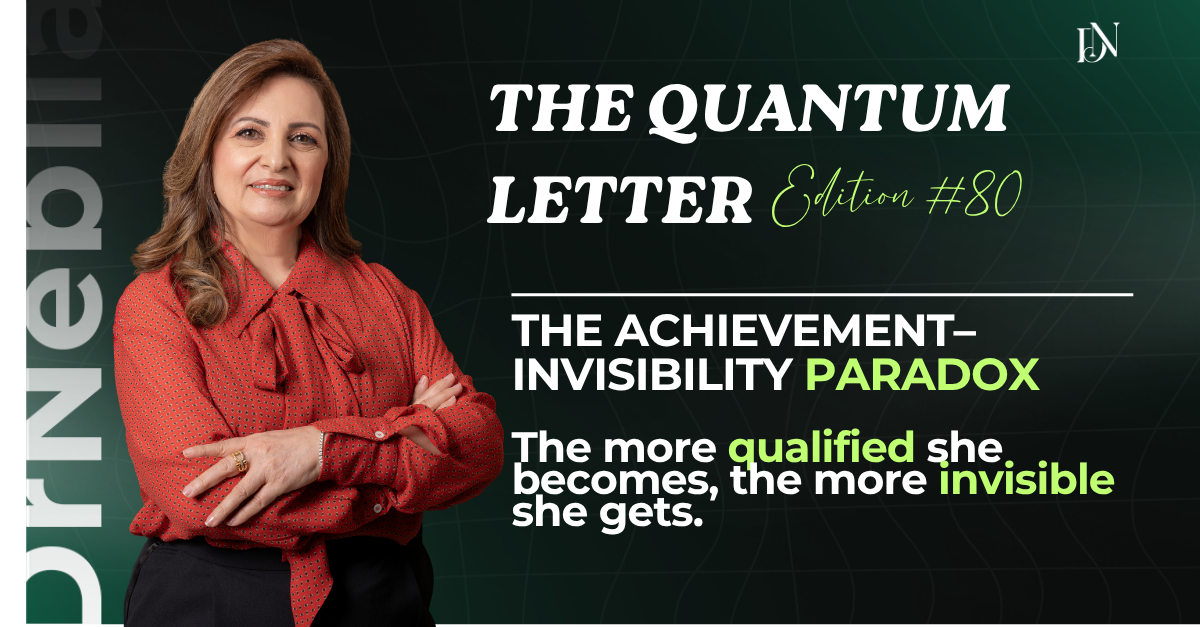
The Achievement–Invisibility Paradox

Articles
September 21, 2025
THE QUANTUM LETTER Edition No. 1
Articles
July 27, 2026
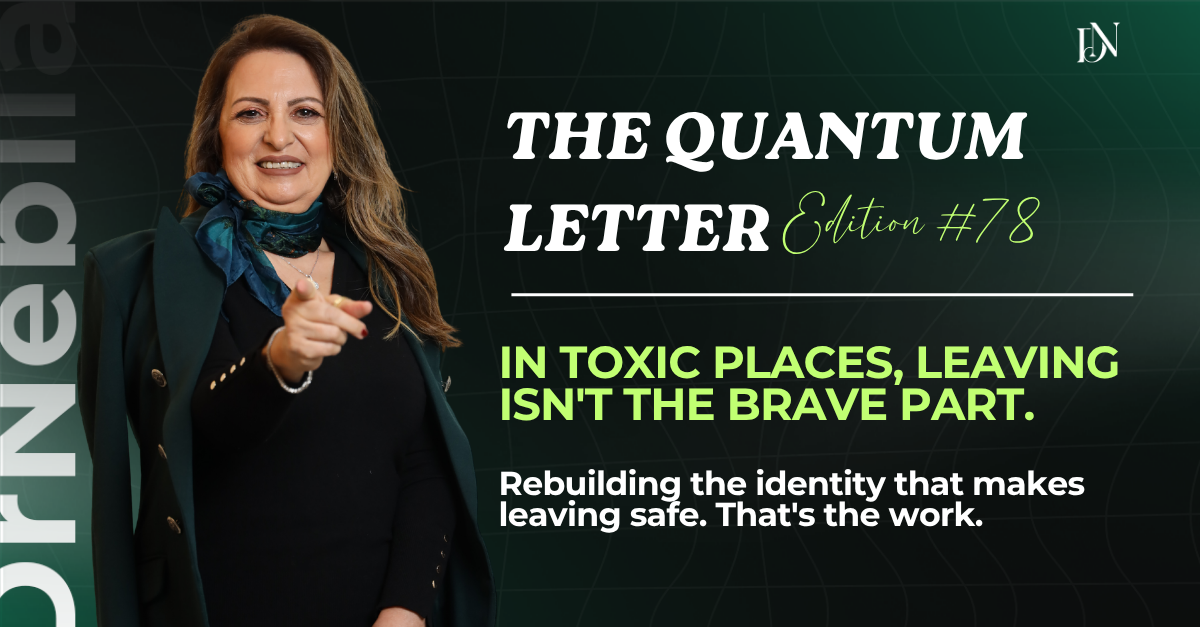
In Toxic Workplaces, Leaving Isn't the Brave Part.

Articles
August 31, 2026